
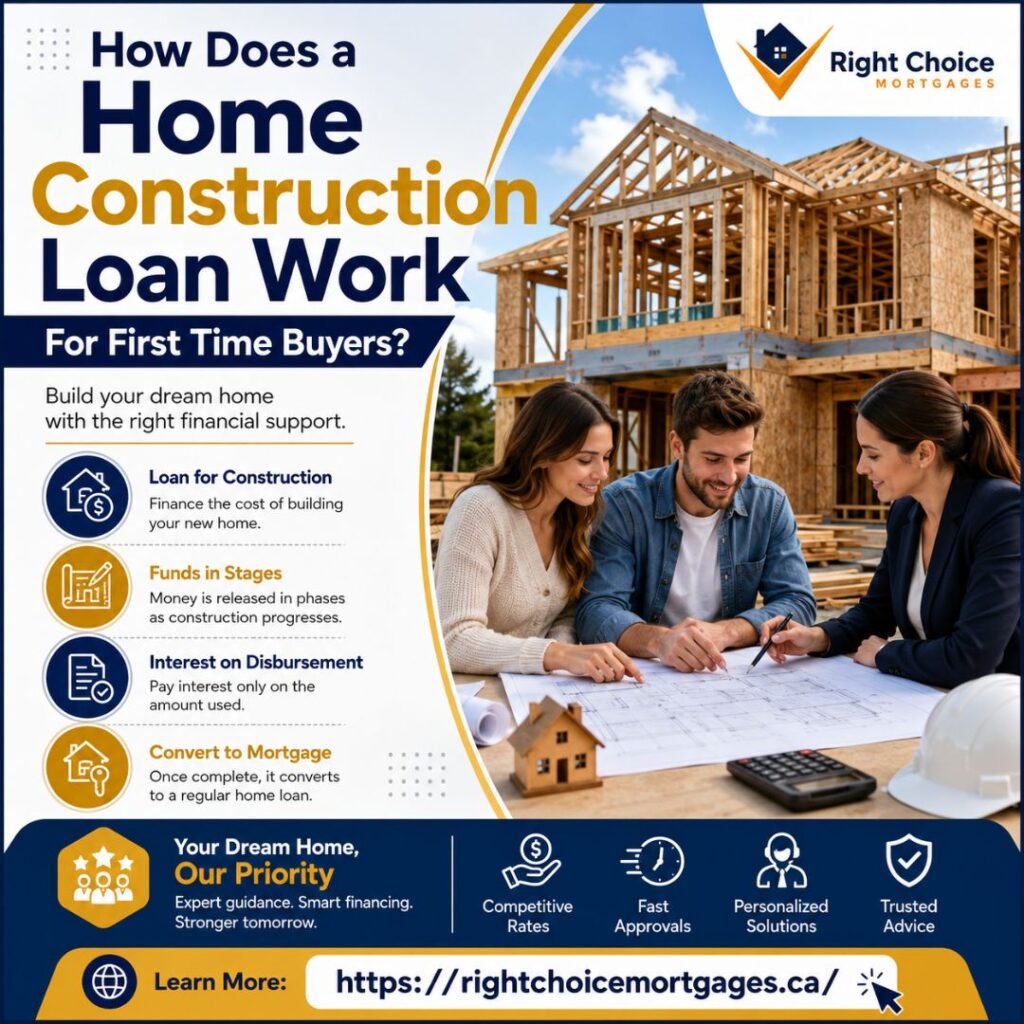
Buying an existing home is one path to homeownership, but for many Canadians, building a home from scratch is the real dream. That’s where a construction mortgage loan comes in. A construction mortgage loan is a short-term financing option that pays for the cost of building a new home in stages, rather than handing over the full amount upfront like a traditional mortgage. If you’re a first-time buyer thinking about building instead of buying, understanding how this type of financing works can save you time, money, and a lot of stress.
In this guide, we’ll break down everything first-time buyers need to know — from qualifying requirements, to rates, to the step-by-step process — so you can walk into your lender’s office feeling confident and prepared.
What Is a Construction Mortgage Loan?
A construction mortgage loan is different from a conventional mortgage because the funds aren’t released all at once. Instead, the lender releases money in “draws” as each stage of construction is completed — foundation, framing, roofing, and so on. An inspector typically visits the site before each draw to confirm the work matches the agreed plan.
Once construction is finished, the loan usually converts into a standard mortgage, sometimes called a “construction-to-permanent” loan. This structure protects both the lender and the borrower, since money is only released as real, verified progress is made on the build.
For first-time buyers, this can feel like a lot of moving parts compared to a simple resale purchase. But once you understand the stages, it becomes a lot more manageable.
Construction Loan Requirements You Need To Know
Before a lender approves your application, they’ll want to see that you’re financially prepared and that your project is well planned. Common construction loan requirements include:
- A solid down payment — usually higher than a resale mortgage, often between 10% and 20% depending on the lender and property type.
- A detailed builder’s contract — including blueprints, materials list, and a realistic construction timeline.
- Proof of income and credit history — lenders want to confirm you can handle payments during and after construction.
- A licensed, qualified builder — many lenders won’t approve owner-built projects without proven experience or a licensed general contractor.
- An appraisal based on the completed home’s value, not just the land or current structure.
- A construction budget with contingency funds — most lenders like to see a buffer of 10-15% for unexpected costs.
Meeting these construction loan requirements early makes the entire approval process smoother, and it shows the lender you’ve thought the project through from start to finish.
Construction Mortgage Rates: What First-Time Buyers Should Expect
One of the biggest questions first-time buyers ask is about cost. Construction mortgage rates are often slightly higher than rates on a standard resale mortgage. This is because construction loans carry more risk for lenders — there’s no finished, appraisable home to secure the loan against until the build is complete.
During the construction phase, many loans are structured as interest-only payments, calculated on the amount drawn so far rather than the full loan amount. This can make monthly payments more manageable while your home is being built. Once construction wraps up and the loan converts to a regular mortgage, construction mortgage rates typically shift closer to standard mortgage pricing, especially if your credit and finances remain strong throughout the process.
It’s worth shopping around and comparing lenders, since rates and terms can vary significantly. Locking in a rate early, where possible, can also protect you from market fluctuations during a lengthy build.
Home Construction Loan Process: Step By Step
Understanding the home construction loan process ahead of time can make the entire experience feel far less overwhelming. Here’s what it typically looks like:
1. Get Pre-Approved Before you even choose a lot or builder, get pre-approved so you know your budget and borrowing power.
2. Choose Your Builder and Finalize Plans Lenders need a complete set of blueprints, a construction contract, and a cost breakdown before they’ll approve financing.
3. Apply For The Construction Loan Submit your application along with the builder’s contract, plans, and financial documents.
4. Draw Schedule Set Up Your lender and builder agree on a payment schedule tied to construction milestones.
5. Construction Begins As each stage is completed and inspected, funds are released to your builder.
6. Final Inspection and Conversion Once the home is complete and passes final inspection, the loan converts into a standard mortgage with regular payments.
Following this home construction loan process closely, and staying in constant communication with your builder and lender, helps avoid delays and unexpected costs.
Tips For First-Time Buyers Building A New Home
- Build in extra time for permits, weather delays, and material shortages.
- Keep a financial cushion beyond your contingency budget.
- Ask your lender exactly when and how draws are released.
- Compare more than one lender before committing, since terms and service can vary widely.
- Stay involved during inspections so you understand exactly what’s being approved at each stage.
Right Choice Mortgages — Helping You Build With Confidence
Building a home for the first time is exciting, but it comes with a learning curve. At Right Choice Mortgages, our goal is to walk first-time buyers through every stage of the process, from understanding requirements to comparing rates, so you can build your new home without financial guesswork. If you’re ready to explore your options, our team is here to help you find the right fit for your project and budget.

Frequently Asked Questions
1. How much down payment do I need for a construction mortgage in Canada?
Most Canadian lenders require between 10% and 20% down for a construction loan, depending on the property type and your financial profile.
2. Are construction loan rates higher than regular mortgage rates in Canada?
Yes, typically. Construction loans carry more risk for lenders since there’s no completed home to secure the loan against until the build is finished.
3. Can a first-time home buyer in Canada get a construction loan?
Yes. First-time buyers can qualify for construction financing, though lenders will look closely at income, credit history, and the builder’s qualifications.
4. How do draw payments work on a Canadian construction mortgage?
Funds are released in stages as construction milestones are completed and verified by an inspector, rather than all at once upfront.
5. Does a construction loan convert into a regular mortgage after the home is built?
In most cases, yes. Once construction is complete, the loan typically converts into a standard mortgage with regular monthly payments.
6. How long does the home construction loan process take in Canada?
Timelines vary, but most builds take anywhere from 6 months to over a year, depending on the size of the project, permits, and weather conditions.
Ready To Start Building? Visit Right Choice Mortgages Today
If you’re a first-time buyer ready to explore construction financing, don’t leave your questions unanswered. Visit Right Choice Mortgages today to speak with a mortgage professional who can guide you through requirements, rates, and the entire building process — so you can move forward with confidence.
This article is for general informational purposes only and does not constitute professional mortgage or other financial advice. Always consult with a licensed financial professional for advice tailored to your specific financial situation. Right Choice Mortgages. assumes no liability for reliance on this content.