
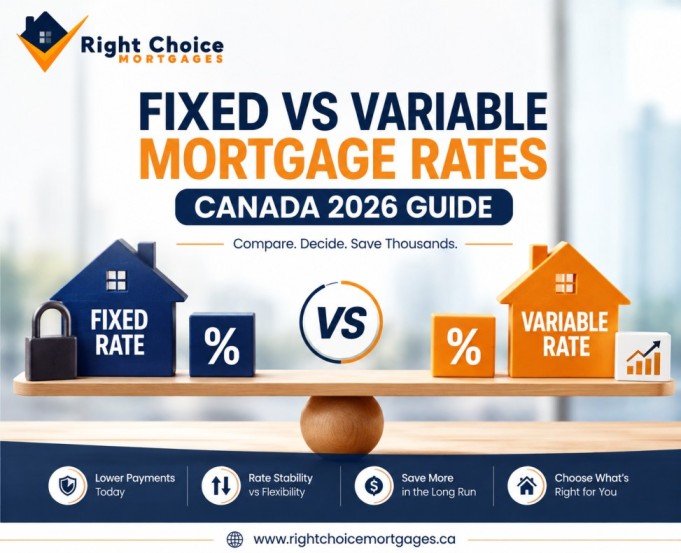
Fixed vs Variable Mortgage Rates Canada 2026 Guide
If you’re staring at loan offers and wondering which box to tick, you’re not alone, thousands of Canadians ask the same question every month. Fixed vs variable mortgage rates Canada is one of the most searched money questions in the country right now, and for good reason: picking the wrong one can cost you thousands over your term. This guide breaks down exactly how each option works, where rates stand in 2026, and how to pick the one that actually fits your life.
What’s Actually Happening with Mortgage Rates Canada 2026
The Bank of Canada has held its overnight rate at 2.25% through six straight announcements, which has kept prime rate steady at 4.45% at most major lenders. That stability is exactly why so many people are researching mortgage rates Canada 2026 before locking anything in the gap between fixed and variable pricing has widened, and getting it right matters more than usual this year.
Right now, the best mortgage rate for a 5-year fixed term sits around 3.9%–4.0%, while 5-year variable rates are running closer to 3.4%–3.5%. That’s a real gap. Variable is cheaper today, but “cheaper today” and “cheaper over five years” aren’t always the same thing which is exactly why this decision needs more than a quick glance at headline numbers.
Fixed vs Variable Mortgage: The Basics You Need First
Before comparing numbers, it helps to understand what you’re actually choosing between.
Fixed rate: Your interest rate is locked for your entire term usually five years. Your payment never changes, no matter what the Bank of Canada does. You know exactly what you’re paying in month 1 and month 60.
Variable rate: Your rate moves with your lender’s prime rate. When the Bank of Canada adjusts its overnight rate, your interest rate follows within days. Depending on your mortgage type, either your payment amount changes, or your payment stays flat while the portion going toward principal shifts.
Neither option is “better” in a vacuum. The right fixed vs variable mortgage choice depends on your risk tolerance, your budget’s flexibility, and how long you actually plan to keep this mortgage.
Why Variable Has Historically Won — But Comes with a Catch
Here’s something most people don’t know: variable rates have come out cheaper than fixed roughly 70% of the time historically. That’s a strong track record. Variable mortgages also carry a much lighter break penalty, typically just three months’ interest if you need to exit early.
The catch is payment risk. If prime rate climbs during your term, your payment can climb with it. For homeowners on a tight budget, an unexpected jump of even $150–$250 a month can be a real strain. This is the trade-off at the heart of every fixed vs variable mortgage rate Canada decision.
Why Fixed Still Makes Sense for a Lot of Buyers
Fixed-rate mortgages exist for one reason: certainty. Your payment is locked, your budget is predictable, and you’re never checking the news wondering if your mortgage got more expensive overnight.
The cost of that certainty is twofold. First, fixed rates usually start higher than variable. Second, breaking a fixed mortgage early triggers the Interest Rate Differential (IRD), a penalty calculation that can run into five figures on a large balance with several years left on the term. If you’re a first-time buyer stretched close to your maximum qualifying amount, or someone who simply sleeps better with a fixed number, fixed is often worth the premium.
How to Actually Decide: A Quick Framework
Ask yourself these four questions before signing anything:
- Can my budget handle a $200–$300 monthly increase without stress? If not, lean fixed.
- Am I likely to sell, refinance, or break this mortgage before the term ends? If yes, variable’s lighter penalty protects you.
- Do I think rates will hold steady or drop, or do I expect them to climb? Your rate outlook should inform your choice, not override your comfort level.
- How much financial cushion do I actually have? More flexibility supports more risk-taking with variable.
There’s no universally correct answer here only the one that matches your numbers and your temperament.
Understanding Your Trigger Rate
If you go variable, there’s one term worth learning now instead of later: your trigger rate. This is the point at which your interest cost has grown so much that your fixed payment no longer covers any principal , you’re essentially just paying interest. For adjustable-payment variable products, this isn’t a concern since your payment moves with prime automatically. But for fixed-payment variable mortgages, hitting your trigger rate usually means the lender asks you to increase your payment, make a lump-sum payment, or switch products. Knowing this in advance means no surprises if prime rate shifts during your term.
Big Banks vs Brokers: Why Your Source Matters
One detail that gets missed in most fixed vs variable mortgage rates Canada comparisons: where you get your rate matters almost as much as which type you pick. Canada’s major banks often post rates noticeably higher than what brokers and monoline lenders can access sometimes by half a percentage point or more on the same term. A broker who works across dozens of lenders can shop your application around, rather than presenting you with just one institution’s offer. That difference alone can be worth thousands over a five-year term, regardless of whether you land on fixed or variable.
2026 Renewal Wave: Why This Year Is Different
Over a million Canadian mortgages are up for renewal in 2026, many locked in years ago at rates well below 2.5%. If you’re one of them, expect a payment increase either way, the real comparison now is fixed vs variable today, not against your old rate. With the Bank of Canada balancing inflation pressure from global energy prices against a cooling labour market, the path forward for both fixed and variable pricing remains genuinely uncertain through the rest of the year. That uncertainty is exactly why locking in the best mortgage rate for your specific situation — rather than chasing a headline number, is the smarter move in 2026.
Frequently Asked Questions
1. Is a fixed or variable mortgage better in Canada right now?
Variable rates are currently lower, but fixed offers payment certainty. The better option depends on your risk tolerance and how long you plan to keep the mortgage.
2. What is the current best mortgage rate in Canada in 2026?
As of August 2026, the best available 5-year fixed rates are around 3.9%–4.0%, while 5-year variable rates are closer to 3.4%–3.5%, though your actual rate depends on your credit, down payment, and lender.
3. Can I switch from a variable to a fixed mortgage mid-term?
Yes, most lenders allow a conversion to a fixed rate during your term, though you’ll typically get the lender’s current fixed rate rather than a discounted one.
4. What happens if I break a fixed-rate mortgage early?
You’ll likely pay the Interest Rate Differential (IRD), which can be significantly more expensive than the flat three-months’-interest penalty on a variable mortgage.
5. Will mortgage rates in Canada go down in 2026?
The Bank of Canada has held rates steady for several announcements in a row, and further cuts aren’t guaranteed given ongoing inflation and trade-related uncertainty. Rate direction should be monitored, not assumed.
6. Is a variable rate risky for first-time home buyers?
It can be, especially for buyers stretched close to their maximum approval amount. First-time buyers with tight budgets often benefit more from the payment stability of a fixed rate.
Final Thoughts
Choosing between fixed and variable isn’t about picking a “winner”, it’s about matching the mortgage structure to your budget, your timeline, and how much rate movement you can comfortably absorb. Rates and lender offer shift often, so the smartest step before renewing or buying is getting current numbers run against your actual situation. That’s where Right Choice Mortgage comes in, our team compares options across lenders to help you find the rate and structure that genuinely fits your goals. Reach out today for a free, no-obligation consultation and get personalized guidance before you lock in your next mortgage.
This article is for general informational purposes only and does not constitute professional mortgage or other financial advice. Always consult with a licensed financial professional for advice tailored to your specific financial situation. Right Choice Mortgages. assumes no liability for reliance on this content.
Get a Free Mortgage Consultation
Book Your ConsultationGet expert guidance tailored to your home financing needs.