
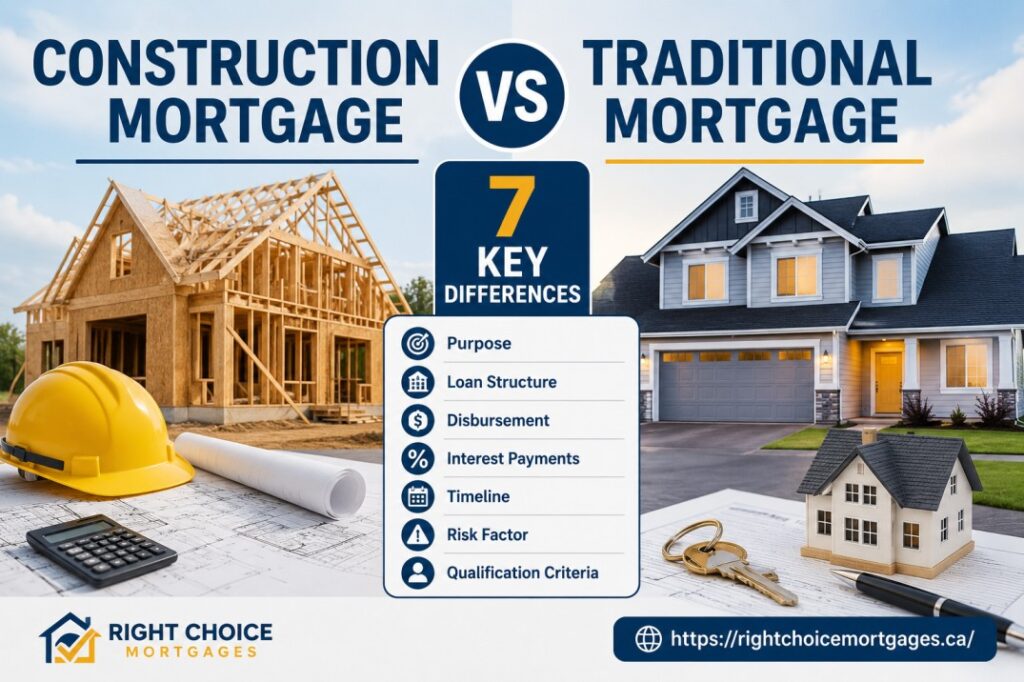
Planning to build your own home instead of buying one that’s already finished? Then you’ve probably already come across two very different loan types, and you’re wondering which one actually fits your project. A construction mortgage and a traditional mortgage may sound similar on paper, but they work in completely different ways, from how the money is released to how much you pay upfront. If you get this decision wrong, it can slow down your build, strain your budget, or even delay your closing date. This guide breaks down the real differences in plain language, so you walk into your lender meeting already knowing what to expect.
What Is a Construction Mortgage, exactly?
A construction mortgage is a short-term loan designed specifically for people building a home from the ground up, whether that’s a custom house, a renovation, or a builder-contracted project. Instead of handing you the full loan amount on day one, the lender releases funds in stages, commonly called draws, as different phases of the build are completed and inspected. This protects the lender’s risk since the property doesn’t fully exist yet, and it also keeps your interest costs lower during construction. Most Canadian lenders will only release the next draw once an appraiser confirms the previous stage of work is actually done.
This structure is why construction financing feels more hands-on than a regular home loan. You’re not just filling out paperwork once and waiting for approval; you’re coordinating inspections, builder invoices, and lender timelines throughout the entire project. It sounds like a lot, but once you understand the rhythm of draws, it becomes a manageable process rather than a stressful one.
What Is a Traditional Mortgage?
A traditional mortgage is the loan type most Canadians are already familiar with. It’s used to purchase a home that already exists and is ready to move into. The lender approves your loan, and on closing day, the entire amount is paid out in one lump sum to the seller. From that point forward, you make regular blended payments covering both principal and interest, following a fixed schedule for the length of your term.
There’s no draw process, no build-stage inspections, and no coordination with contractors. It’s a simpler, more predictable path, which is exactly why it works well for resale homes but doesn’t fit the reality of a construction project. If your home doesn’t physically exist yet, a traditional mortgage structure simply isn’t built to support that kind of financing.
1. How the Funds Are Released
This is the single biggest difference between the two. A construction mortgage pays out in stages, tied to milestones like the foundation, framing, lock-up, and final completion. A traditional mortgage pays out entirely at once, on closing day, because the home is already built and ready for possession. If your project involves any level of ground-up building, this staged approach isn’t optional, it’s how nearly every Canadian lender structures construction financing to manage their exposure.
2. Down Payment Requirements Are Different
Traditional mortgages in Canada can go as low as 5% down for insured buyers, depending on the purchase price and your qualification. Construction loans are a different story entirely. Because the lender is taking on more risk with an unfinished property, most construction mortgage programs require a down payment somewhere between 20% and 35% of the total project cost. This is one of the first things buyers are surprised by, and it’s worth budgeting for early rather than discovering it midway through planning.
3. Interest Payments During the Build
With a traditional mortgage, your payments start immediately after closing and include both principal and interest, calculated on the full loan amount. A construction mortgage works differently. You only pay interest on the portion of funds that have actually been advanced to you, not the full approved amount. So if you’ve only received your first draw for the foundation, you’re only paying interest on that draw, not on the entire project budget. This keeps carrying costs lower while your home is still being built.
4. Documentation and Approval Complexity
Buying an existing home mainly requires proof of income, credit history, and a purchase agreement. Building one requires all of that plus building permits, a fixed-price contract with your builder, detailed construction plans, a realistic budget, and often a land appraisal if you don’t already own the lot. Construction financing simply demands more paperwork upfront because the lender needs confidence that the project is realistic, permitted, and financially sound before releasing a single dollar.
5. Risk Exposure for the Lender
Lenders view unfinished homes as harder to resell if something goes wrong, which makes construction loans inherently riskier than mortgages on completed properties. That risk is exactly why interest rates on construction mortgages tend to run higher, why draw inspections exist, and why down payment requirements are steeper. A traditional mortgage carries none of that uncertainty since the collateral, meaning the finished home, already exists and has a clear market value.
6. What Happens After the Project Is Done
Once your build is fully completed and has passed final inspection, most construction mortgages convert into a standard mortgage, sometimes called a construction-to-permanent structure. At that point, your payments shift from interest-only draws to regular blended principal and interest payments, just like a traditional mortgage from day one. Not every lender automates this conversion, so it’s worth confirming upfront whether you’ll need a second approval and closing once construction wraps up.
7. Flexibility and Customization
A traditional mortgage locks you into buying whatever already exists on the market. A construction mortgage gives you the freedom to design a home around your exact needs, layout preferences, and lot. That flexibility comes with more moving parts, more decisions, and more coordination, but for buyers who want a custom-built home rather than a resale property, it’s often worth the extra complexity involved in construction financing.
Which One Is Right for You?
If you’re purchasing a home that’s move-in ready, a traditional mortgage is the simpler, faster, and more predictable route. If you’re building from scratch, renovating extensively, or working with a builder on a custom home, a construction mortgage is built specifically for that reality, staged draws, interest-only payments, and all. Right Choice Mortgage works with buyers across Canada to figure out which structure actually fits their project and budget, rather than forcing a one-size-fits-all approach onto a build that needs more flexibility.
Choosing between the two isn’t really about which loan is “better,” it’s about matching the financing to what you’re actually doing. A resale purchase and a ground-up build are fundamentally different transactions, and trying to force one loan type into the wrong situation usually creates more stress than it solves. Right Choice Mortgage can walk you through both options side by side so you can see exactly how the numbers, timelines, and payments compare for your specific project.
At the end of the day, the right structure depends on your builder’s timeline, your down payment savings, and how comfortable you are managing a staged draw process. Right Choice Mortgage helps buyers compare lenders, understand draw schedules, and avoid the common mistakes that slow down custom builds across Canada. Getting this right at the start saves you both money and headaches later in the project.
FAQs
1. Is a construction mortgage harder to get than a traditional mortgage?
Yes, generally. Lenders require more documentation, including builder contracts, permits, and detailed plans, plus a larger down payment, making approval more involved than a standard home purchase.
2. Are construction mortgage interest rates higher than traditional mortgage rates?
Typically, yes. Because unfinished homes carry more risk for the lender, construction mortgage rates usually run higher than rates on a comparable traditional mortgage.
3. How much down payment do I need for a construction mortgage in Canada?
Most lenders require between 20% and 35% of the total project cost, compared to as little as 5% for an insured traditional mortgage on an existing home.
4. Can a construction mortgage convert into a regular mortgage automatically?
In many cases yes, once the build passes final inspection, but not all lenders automate this. Confirm the conversion process with your lender before signing.
5. Do I pay interest on the full loan amount during construction?
No. With most construction mortgages, you only pay interest on funds that have already been advanced through draws, not the total approved amount.
6. What documents do I need for construction financing that I wouldn’t need for a traditional mortgage?
You’ll typically need building permits, a fixed-price builder contract, construction plans, a project budget, and sometimes a separate land appraisal.
7. Can I use a construction mortgage to buy the land and build the home?
Often yes. Many lenders allow your first draw to be used toward land costs, though you’ll usually still need to cover a portion of that expense yourself.
This article is for general informational purposes only and does not constitute professional mortgage or other financial advice. Always consult with a licensed financial professional for advice tailored to your specific financial situation. Right Choice Mortgages. assumes no liability for reliance on this content.