
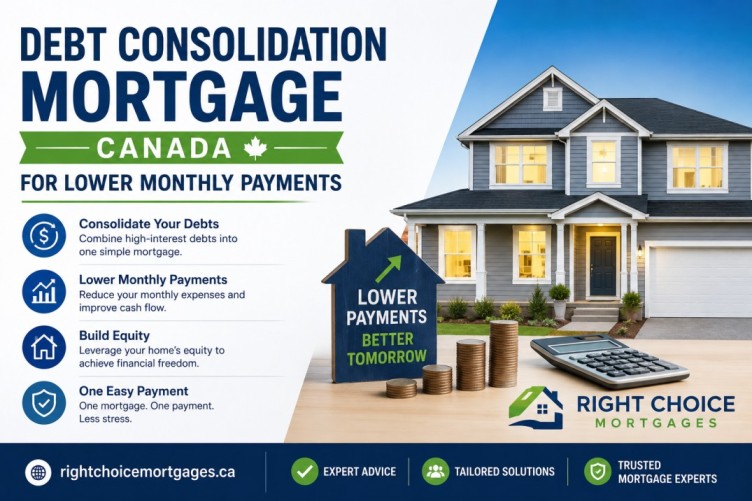
Debt Consolidation Mortgage Canada for Lower Monthly Payments
Tired of Juggling Multiple Debts? There’s a Smarter Way to Breathe Easy
If your credit card bills, car loan, and line of credit are piling up faster than you can keep track of, you’re not alone. Thousands of Canadian homeowners are turning to a Debt Consolidation Mortgage to roll all their high-interest debts into one manageable monthly payment. Instead of juggling five different due dates and five different interest rates, you get one simple payment, often at a much lower rate than what credit cards or personal loans charge. It’s not a magic fix, but for many homeowners sitting on equity, it’s one of the smartest financial moves available right now.
What Exactly Is a Debt Consolidation Mortgage?
In simple terms, this type of mortgage lets you use the equity you’ve built in your home to pay off other debts. Think credit cards, payday loans, car loans, or even unpaid taxes. You refinance your existing mortgage for a higher amount, use the extra funds to clear those debts, and are left with a single loan to manage going forward. Because mortgage rates are typically far lower than credit card interest (which can run 19% to 29%), this approach can save you thousands of dollars over time. It also simplifies your financial life, since you’re no longer tracking multiple lenders, multiple statements, and multiple payment dates every month.
Why More Canadians Are Choosing Mortgage Debt Consolidation Canada Options
Interest rates on unsecured debt have stayed painfully high, and household debt levels across the country continue to climb. That’s pushing more homeowners toward Mortgage Debt Consolidation Canada solutions as a practical way to regain control. Instead of watching interest charges eat away at your paycheque every month, consolidating shifts your debt into a secured, lower-interest product tied to your home. This isn’t just about saving money either; it’s about peace of mind. Knowing exactly what you owe, to one lender, on one schedule, takes a huge mental load off your shoulders. For many families, that clarity alone is worth the process of refinancing.
How the Process Actually Works
Here’s the good news: the process is more straightforward than most people expect. First, a mortgage professional evaluates how much equity you have available in your home. Next, they help you figure out how much of your existing debt can realistically be rolled into the new mortgage. From there, your current mortgage gets refinanced (or in some cases, replaced with a second mortgage) for an amount large enough to cover your outstanding debts. The lender pays off your creditors directly, and you’re left with one new mortgage payment. Approval timelines vary, but most homeowners can complete the entire process within a few weeks, provided their paperwork and property value check out.
The Real Benefits Beyond Just Lower Payments
Saving money on interest is the headline benefit, but it’s far from the only one. Consolidating debt into your mortgage can boost your credit score over time, since you’re no longer carrying high credit utilization on your cards. It also frees up cash flow every month, money that can go toward savings, home improvements, or simply covering everyday costs without stress. Many homeowners find that a Debt Consolidation Loan Canada option gives them breathing room they haven’t had in years, especially if they’ve been making minimum payments on multiple cards without making real progress on the balance.
Is a Debt Consolidation Mortgage Right for You?
Not every situation calls for this solution, and that’s worth being honest about. If you have very little home equity, or if your existing mortgage has a steep prepayment penalty, refinancing might cost more than it saves. It’s also important to look at the root cause of the debt. If overspending habits aren’t addressed, consolidating debt without changing spending patterns can lead right back to the same problem down the road. That said, for homeowners with decent equity and a genuine plan to stay debt-free going forward, this option can be a genuine turning point rather than a temporary patch.
Common Mistakes Homeowners Make When Consolidating Debt
One frequent misstep is consolidating debt without addressing the spending habits that caused it in the first place. Another is failing to compare lenders and simply accepting the first offer that comes along, which can mean missing out on better rates or terms elsewhere. Some homeowners also overlook closing costs, appraisal fees, and legal charges tied to refinancing, which can eat into the savings if not planned for properly. Working with an experienced broker helps you avoid these pitfalls and ensures the numbers actually work in your favor before you commit to anything.
How to Get Started With Confidence
The smartest first step is getting a clear picture of your current debt, your home’s estimated value, and your remaining mortgage balance. From there, a mortgage professional can walk you through realistic scenarios, showing you exactly how much you could save and what your new monthly payment would look like. Don’t be afraid to ask questions about fees, rate terms, and how flexible the mortgage is if your situation changes later. A good broker will lay out the pros, the cons, and the numbers honestly, rather than pushing you toward a decision that doesn’t fit your goals.
Why Working With the Right Team Matters
Choosing the right mortgage professional can make the difference between a stressful process and a smooth one. At Right Choice Mortgage, the team focuses on finding solutions tailored to each homeowner’s actual financial picture rather than a one-size-fits-all approach. Whether you’re dealing with credit card debt, a car loan, or several smaller debts that have piled up over time, having someone in your corner who understands the Canadian mortgage market makes navigating the paperwork and lender options far less overwhelming.
Frequently Asked
1. What credit score do I need for a debt consolidation mortgage?
Requirements vary by lender, but most traditional lenders look for a score of 600 or higher. Homeowners with lower scores still have options through alternative or private lenders, though rates may be somewhat higher.
2. How much equity do I need in my home to qualify?
Most lenders require at least 20% equity remaining after the new mortgage amount is calculated. The exact figure depends on your property value, existing mortgage balance, and the lender’s specific guidelines.
3. Will consolidating my debt hurt my credit score?
In the short term, there may be a small dip due to the credit inquiry and refinancing process. Over time, most homeowners see their score improve as credit card balances drop and payments stay consistent.
4. Can I consolidate debt if I’m self-employed?
Yes, self-employed Canadians can absolutely qualify, though lenders typically ask for additional income documentation such as tax returns or bank statements to verify stable earnings.
5. Is it better to refinance or take a second mortgage for debt consolidation?
It depends on your existing mortgage rate and term. Refinancing replaces your current mortgage entirely, while a second mortgage sits alongside it. A broker can help determine which route saves more money based on your specific numbers.
6. Are there penalties for breaking my current mortgage to consolidate debt?
Possibly, depending on whether you’re in a fixed or variable term and how much time remains. It’s worth calculating the penalty against your potential interest savings before moving forward.
7. How long does the debt consolidation mortgage process take in Canada?
Most applications are processed within two to four weeks, though timelines can shift depending on appraisal scheduling, document readiness, and lender workload.
Take the First Step Toward Financial Relief Today Carrying multiple high-interest debts month after month isn’t sustainable, and you don’t have to keep doing it. A well-structured debt consolidation plan can lower your payments, reduce your stress, and put you back in control of your finances. If you’re ready to explore your options and see real numbers based on your situation, reach out to Right Choice Mortgage today for a no-obligation conversation about what’s possible for your home and your financial future.
This article is for general informational purposes only and does not constitute professional mortgage or other financial advice. Always consult with a licensed financial professional for advice tailored to your specific financial situation. Right Choice Mortgages. assumes no liability for reliance on this content.