Can You Get a Mortgage in Canada with Bad Credit? Here’s the Honest Answer
Yes, you can, and a bad credit mortgage Canada homebuyers qualify for is more common than most people expect. It works a little differently from a standard bank loan, but approval is realistic when you know where to apply and how to prepare. Many lenders care about more than a three-digit score.
Maybe a missed payment, a maxed-out credit card, or a rough year after a job change pulled your number down. Lenders do notice those things, but they are not the whole story. Some lenders weigh your income, your down payment, and the property itself just as heavily, and this guide shows you how to use that.
Is Your Score Really the Problem? What “Bad Credit” Means in Canada
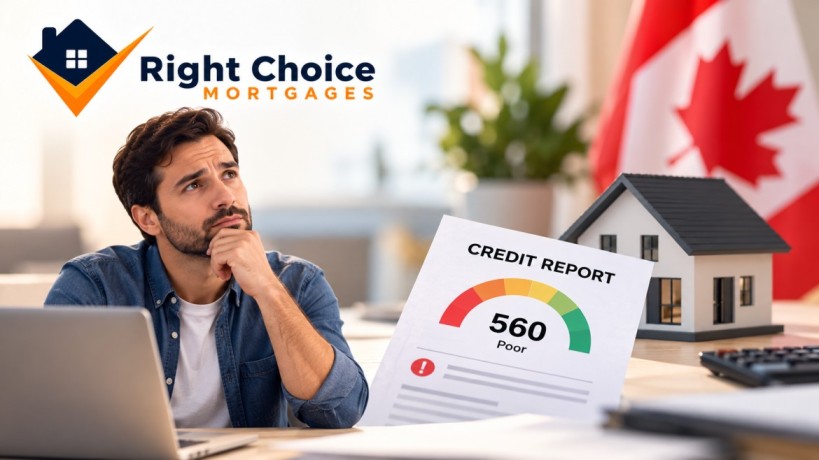
Credit scores in Canada run from 300 to 900, and both Equifax and TransUnion report them. Most big banks like to see 680 or higher. Scores from 600 to 679 are usually called fair, and anything under 600 tends to land in the poor range. Late payments, collections, a consumer proposal, or high card balances are the usual causes.
A low number does not end the conversation. Buyers hoping to secure a mortgage in Canada with bad credit simply need a lender who reads the full file instead of stopping at the score. Steady income, savings, and equity can balance out a shaky history, so check your reports before you apply.
Where to Look: Banks, B-Lenders, and Private Lenders
Think of lenders as three doors. If the first one stays shut, the next may open. The main bad credit mortgage lenders Canada borrowers can approach fall into these groups.
Banks and A-lenders offer the lowest rates, but their rules are strict. Insured mortgages generally need a score of around 600 at minimum, and most banks prefer higher. If your file is clean enough, start here.
B-lenders include credit unions, trust companies, and alternative lenders. A B-lender loan is the most common bad credit mortgage Canada residents choose, because these lenders often accept scores in the 500s. The tradeoff is a higher interest rate and a lender fee.
Private lenders are individuals or investment pools who lend mainly against the equity in your property. Approval can be fast, even with a very low score, but terms are short and rates are the highest of the three. You can read more about private mortgage options before deciding if this route suits you.
How Much Money Do You Need Upfront?
Down payment rules in Canada depend on the home’s price. For an insured mortgage, you need at least 5% on the first $500,000 and 10% on the portion between $500,000 and $1.5 million. Homes above $1.5 million require 20% down. Any mortgage with less than 20% down must be insured.
Lenders tend to be more flexible when you bring a larger down payment, and poor credit often means they ask for more. If you are buying your first home, look into first-time buyer programs that may help with the upfront costs. Then run your numbers through a mortgage affordability calculator so you know your comfortable price range before you start house hunting.
The Price Tag: What Higher Risk Really Costs
Lenders charge more when they take on more risk, and it helps to know what that looks like. Expect a higher interest rate than a prime borrower would get, plus a lender or broker fee that is often a percent or two of the loan. Terms are usually short, commonly one year, and prepayment rules can be stricter.
Many borrowers treat this as a bridge rather than a permanent solution. You buy the home, make every payment on time for a year or two, and let your score recover. Once it does, you may be able to refinance into a lower rate and move to a more affordable lender.
Your 6-Step Plan to Approval
Here is a simple roadmap to get a mortgage with bad credit in Canada without wasting weeks on dead ends.
- Pull both credit reports. Request free copies from Equifax and TransUnion, then dispute any errors you find.
- Set a real budget. Include property tax, heating, insurance, and a cushion for repairs.
- Collect your documents. Lenders typically want ID, recent pay stubs or a Notice of Assessment, about 90 days of bank statements, and proof of your down payment.
- Speak with a mortgage broker. A broker can see which lenders fit your file instead of making you guess.
- Compare offers carefully. Look at the rate, fees, term length, and penalties, not only the monthly payment.
- Plan your exit. Decide early whether you will renew or move to a better lender when the term ends.
Self-Employed, Newcomer, or Recovering from Debt? You Have Options Too
Getting a mortgage in Canada with bad credit is also possible if you work for yourself. Business owners often show lower taxable income than they really earn, which confuses traditional lenders. Alternative lenders look at bank deposits and business history instead, and a dedicated self-employed mortgage can match your real earnings to the right product.
Debt is another common roadblock. If credit cards and loans are dragging down your score and eating your cash flow, folding them into your home loan may help. Debt consolidation mortgages can replace several high-interest payments with one, which often lifts your score over time.
Quick Wins: Raise Your Score Before You Apply
You do not need a perfect score, but even a modest bump can unlock better terms. A 30 to 50 point jump may be all it takes to get a mortgage with bad credit in Canada at a lower rate. These habits work fastest:
- Pay every bill on time, since payment history carries the most weight.
- Keep credit card balances below about 30% of your limit.
- Avoid opening new accounts in the months before you apply.
- Keep your oldest accounts open to preserve your credit history length.
Mistakes That Can Sink Your Application
Some errors are easy to avoid. Submitting several separate applications to different lenders in a short time can trigger multiple credit checks. Hiding a debt or a missed payment usually backfires, because lenders find it anyway. Accepting the first offer is another trap, since not all bad credit mortgage lenders Canada has are equal in cost or flexibility.
Also read the fine print on penalties. A cheap rate with heavy exit fees can cost more than a slightly higher rate with flexible terms, especially if you plan to refinance in a year or two.

Frequently Asked Question
1. What credit score do I need to buy a home in Canada?
Big banks usually want 680 or above, and insured mortgages generally start around 600. Alternative lenders may approve scores in the 500s, and private lenders can go lower when the property has strong equity.
2. Can I get approved after bankruptcy or a consumer proposal?
Yes, though your options narrow right after discharge. Many buyers wait a year or two while rebuilding credit with on-time payments. Alternative and private lenders may consider you sooner with a solid down payment.
3. How much higher are interest rates with poor credit?
Rates are typically noticeably higher than prime rates, and you may pay a lender fee as well. The gap depends on your score, down payment, and property, so compare several offers.
4. Can I buy with 5% down and poor credit?
It is difficult. A minimum down payment combined with weak credit is a risky pairing for lenders. A larger down payment improves your odds and widens your choice of lenders.
5. Can newcomers to Canada get a mortgage without a credit history?
Often yes. Some lenders offer newcomer programs that look at your employment, income, and savings. Building a Canadian credit file early with a credit card or small loan also helps.
6. How long does it take to rebuild credit enough for a bank mortgage?
It varies, but consistent on-time payments and lower balances can show results within 6 to 12 months. Larger setbacks, such as a bankruptcy, can take a couple of years to recover from.
7. Is it worth using a mortgage broker with bad credit?
For most people, yes. A broker has access to many lenders, including ones you cannot reach directly, and can match your situation to the right product. They also handle the paperwork and negotiation.
Ready to Move Forward? Right Choice Mortgage Is Here to Help
You now know how a Bad Credit Mortgage Canada buyers can qualify for actually works, what it costs, and which steps improve your odds. The next move is talking to someone who knows the lenders. The team at Right Choice Mortgage can review your situation, explain the bad credit mortgage lenders Canada offers that fit your file, and guide you from application to approval. Reach out today and take the first step toward your own front door.
This article is for general informational purposes only and does not constitute professional mortgage or other financial advice. Always consult with a licensed financial professional for advice tailored to your specific financial situation. Right Choice Mortgages. assumes no liability for reliance on this content.